
 Starrays
By Zack Tsebee – NASS, Abuja.
The Senate Committee on Marine and Transport urges the Nigerian Ports Authority -NPA to proactively design improve to the highest standards of accountability and appropriation efficiency in the Ministry hence they are on of the top revenue generating agencies of the Federation and actors in the Marine sector that plays a vital role in mobilizing of Internal trade, supporting Port infrastructure development, and in improving the Nation’s competitiveness as a Maritime hub.
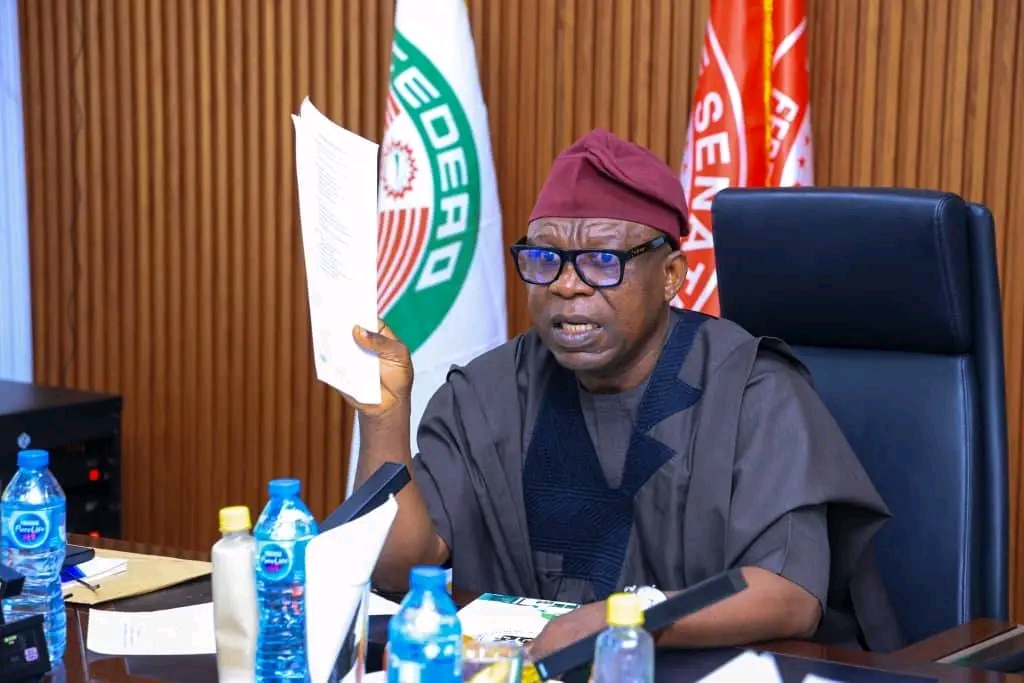
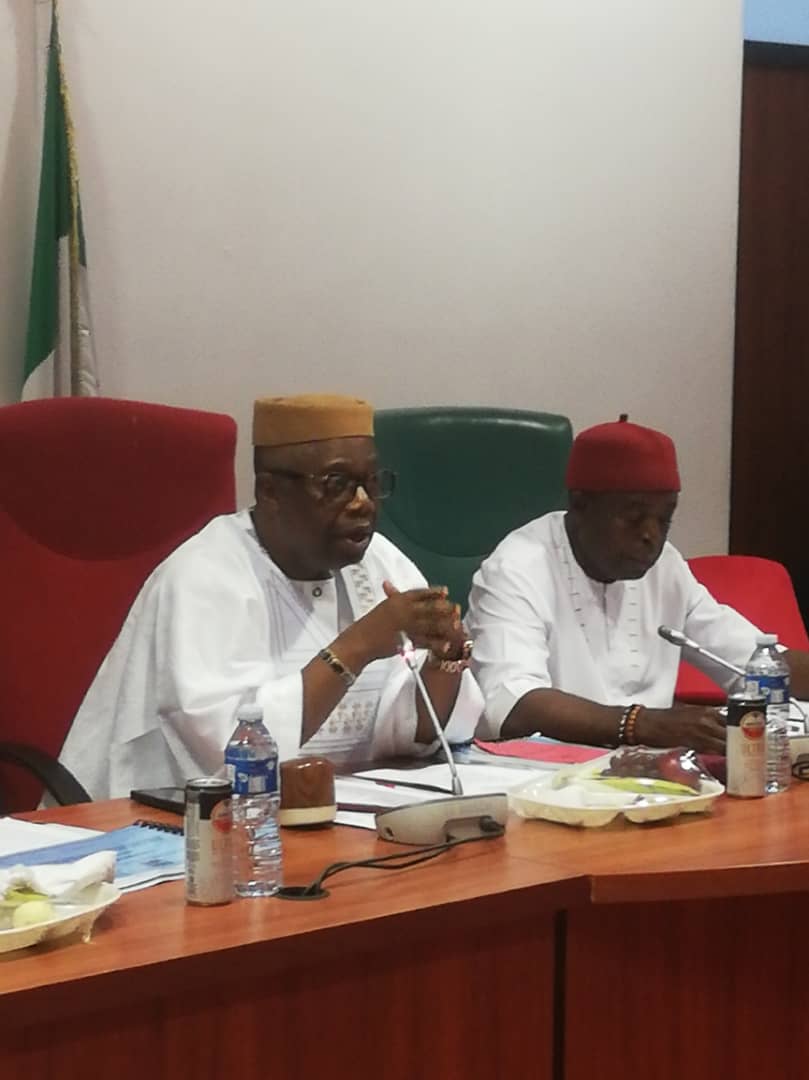
The Committee through its Chairman, Dist. Sen. Wasiu Sanni Eshilokun said this during speech delivery during the 2025 Internal Generated Revenue – IGR Budget defense meeting and Review of the 2024 Appropriation performance of the Nigerian Ports Authority, NPA.According to the Committee, the Senate has an exclusively power of Appropriation through the provisions of the 1999 Constitution of the Federal Republic of Nigeria unde section 80 and 81; and also of oversight Ministries, Departments and Agencies -MDAs under section 88 and 89 to sanitize with relevant questions that ensures the appropriate use of funds in accordance with the National benefits.Again, under section 20 and 21 of the Fiscal Responsibility Act 2002 mandates all government Corporations and agencies including those mentioned in the first schedule of the Act to prepare and submit their annual Budgets and Estimated Revenue to the National Assembly for assessment, consideration and approval alongside the submission of periodic performance to improve transparency and fiscal discipline.
Speaking further, the Committee said the 2024 Appropriation Act will focuse on the key performance of the status o project implementation, indicator -budget utilization, revenue performance, and service delivery which pave way to assess whether the Appropriation funds were effectively deployed and whether the projects are being executed in line with Nation departmental goals.
In the concluding part of the Senate, the committee assures to work with NPA and all relevant stakeholders not as an adversary but as partner in progress to ensures that, Maritime Sector contributes meaningfully to National Development and Economy growth.
In response, the Managing Director, Nigerian Ports Authority (NPA) sets its highlights from top to toe for 2025, sticking out a revenue target of ₦1.279 trillion — a 40% increase from the ₦894 billion as documented in 2024 appropriation Act.
This made known recently by the Managing Director of the NPA, Dr. Abubakar Dantsoho on it sitting with Senate Committee on Marine Transport session reviewing the 2024 budget performance and the 2025 proposal at the National Assembly Complex, Abuja.
The NPA Director, Dr. Dantsoho praised the Senate committee for its unrelenting oversight functions, underscoring the significance of transparency and collaboration in executing national economic goals.
“Your unwavering support has made it possible for us to consistently deliver well-articulated annual financial plans,” he said.
Endorsing NPA’s tactical reputation, Dantsoho underscored two crucial stakes of the agency’s fiat: smoothing trade and conveying critical marine and port-side services. He informed that, disorganization in Nigeria’s ports could consequence result in cargo stream traffic of being diverted to contending West African nations such as Benin, Ghana, and Côte d’Ivoire.
In the direction of persist modest, the NPA is ranking large-scale funds in port infrastructure, digital transformation, modern equipment, and workforce training. These efforts aim to enhance ship turnaround time, grow cargo volumes, and position Nigeria as West Africa’s maritime hub.Regurgitating the 2024 Appropriation Act, the NPA allocated ₦185 billion for operations and ₦232 billion for capital projects—though the latter is expected to increase as procurement headways.
He, however raised concerns about crucial complications, particularly the federal government’s 50% automatic revenue deduction which he said sternly baskets capital project implementation.
“These deductions, combined with delayed remittances and restrictive procurement ceilings, often delay or stall infrastructure upgrades,” he explained.
Notwithstanding, these challenges of the NPA contributes a record of ₦400 billion to the federal treasury in 2024—nearly double its ₦213 billion remittance from the erstwhile year. This included ₦10 billion in direct cash, ₦46 billion from port development levies, and ₦344 billion through automatic deductions.
Considering ahead of the NPA’s 2025 revenue projections, the Bill is built on several macroeconomic and operational assumptions, including:Exchange rate stability at $1 to ₦1,400’; Full operational capacity at Dangote Refinery by late 2025, Extension in LNG and integrated refinery traffic, Better imports from China amid shifting geopolitical dynamics, Advanced cargo output in eastern ports, Foremost transformational works at Tin Can and Apapa ports.
The NPA expects to generate ₦413 billion from cargo handling, ₦544 billion from ship services, ₦249 billion from concessions, and ₦73 billion in miscellaneous revenue. On the outlay side, ₦1.1 trillion has been proposed — ₦778 billion for capital projects and ₦364 billion for operations.In the meantime, the Chairman of the Senate Committee on Marine Transport, Senator Wasiu Sanni Eshilokun, reiterated the National Assembly’s duty to ensure prudent public spending.
“Our review will focus on key performance indicators, project execution, revenue performance, and service delivery,” he said.
He proclaimed the impending oversight visits to NPA projects in Lagos to verify 2024 budget implementation and urged the agency to present vibrant campaigns for ornamental revenue, revolutionizing procedures, and improving port security.
“We are not adversaries, but partners in progress, united by a shared goal to strengthen Nigeria’s maritime industry for sustainable economic growth,” Eshilokun concluded.